
Kuberoke and the Art of Keeping It Real
How To Grow A Community Without Killing It

Lian Li

Everything kicked off back in 2016, I just started public speaking at JavaScript conferences, where my fellow speakers and me would often find ourselves at karaoke bars after hours. To be honest, back then karaoke didn’t excite me as much as it does today, but it was certainly a fun tradition with colleagues I have come to call friends.
In 2018 I moved to Amsterdam and Cloud Native, a pretty harsh break from both the town and community I loved and has gotten me this far. But I was welcomed with open arms and it was here that my love (or let’s be honest, obsession) with karaoke came to be.
One night, I randomly walked into a tiny karaoke bar in Chinatown. It was almost exclusively frequented by Asian Dutchies. This place was an Asian hangout first, and a karaoke bar second. But it wasn’t the karaoke that made me come back, it was the sense of community. It quickly became my go-to hangout for the next years. If I was in Amsterdam on a Friday evening, I was at KTV.
I never knew the names of most regulars, but I knew all of their songs, which harmonies they sang, and which shots they liked. This was when I realised: I loved connecting with people through music. Not with their names or jobs, but who they were as people and the guilty pleasure songs they secretly loved to sing.
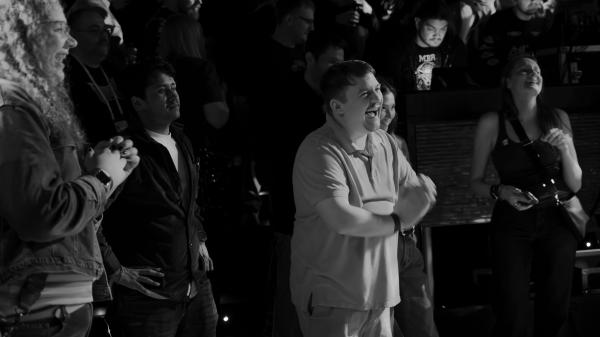
In 2023, KubeCon was coming to Amsterdam. At this point I was a regular karaoke instigator at the conferences I attended and jokingly called myself Chief Karaoke Officer. My love of community organising and karaoke had already seeped into my professional life, but for Amsterdam I was planning something big: I wanted to organise a KubeCon afterparty at my homebase, KTV Amsterdam. This wasn’t going to be just another karaoke party, it was an invitation for everyone to share in the culture and community that made karaoke so special to me.
The space was enough to hold about 50 people and my biggest concern was whether I would be able to fill it. In the end, over 300 people registered.
I still think back to that very first event that felt like I invited the Cloud Native Community into my living room. I watched folks who were shy at first deliver the performance of their life, cheered on by a crowd of friends and my heart felt full.
The real event is not the party, it’s sharing joy with the community.
Since then, we held four more events in Chicago, Paris, London and Amsterdam again. With the most recent iteration drawing a whopping 450 karaokists. The team has also grown from initially two people who barely knew what they were doing, to six seasoned conference and community organisers. And while we strive to grow more professional and bigger with each iteration, we also made deliberate choices to preserve that sense of belonging and joy, that drew me to karaoke in the first place.
In order to keep the event true to where it came from, we had to first understand its essence. The real event is not the party, it is sharing our joy with the community. This became our North Star, guiding us during difficult decisions.
Moving with KubeCon across cities each year means we never expect to go to the same place twice. What’s normal and expected in one city, country, or culture can be completely unheard of in another. We learned the hard way that we had to make every expectation and requirement explicit (especially the obvious ones) when dealing with vendors.
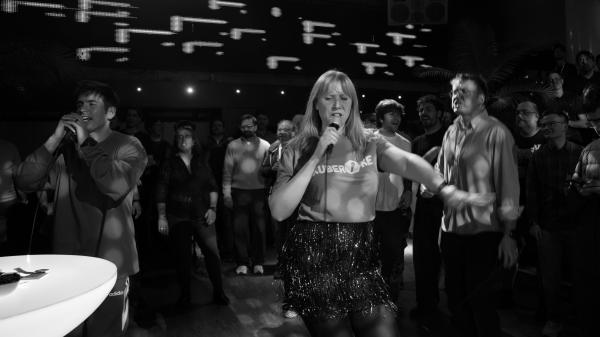
Another challenge is the aforementioned tension between corporately sponsored, professional event and remaining by the community for the community. With no focus on any one sponsor. In fact, we provide remarkably few perks to our sponsors. We don’t pass on email addresses, offer no booths or badge scanning opportunities. The only real value is association with the Kuberoke brand. And yet, year after year we hit our financial goals, often with the same partners.
We are transparent by default. All organisers get full access to all tools and docs and our sponsors get insight into our balance sheet. Not only does this distribute the mental load, it also builds goodwill, and encourages early feedback. We believe that trust, consistency, and accountability form the basis for good business.
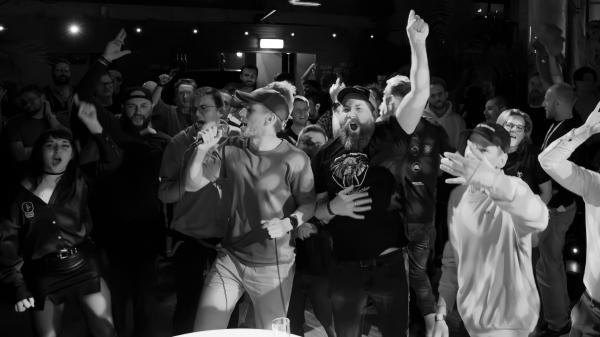
Finally, there is a balancing act between allowing folks to let loose, be intoxicated and act silly, and making sure everyone still feels safe, physically and emotionally. Our expressed goal is to encourage vulnerability. To help people step outside their professional roles and just be uniquely and unapologetically themselves, no matter their cultural background, music taste or singing ability.
To that end, we offer non-alcoholic and low-alcoholic drinks as social lubricant, but intentionally steer away from financing benders. It’s a community party, not a night out on the town.
Protect the essence. Everything else is just logistics.
We also put our Code of Conduct up around the venue and require all attendees to agree to it when they register. This is to explicitly signal: While we are all here to have a good time, there are still rules in place.
Our CoC is tailored specifically to karaoke, addressing hurtful behaviour we have seen or experienced ourselves, such as: shaming people for their song choices or choosing songs that depict or glorify violence or sexual harassment. When new kinds of issues came up, we updated the CoC accordingly. We understand that the Code of Conduct is a shield to protect the most vulnerable in our community, not a sword to wield against people we don’t like.
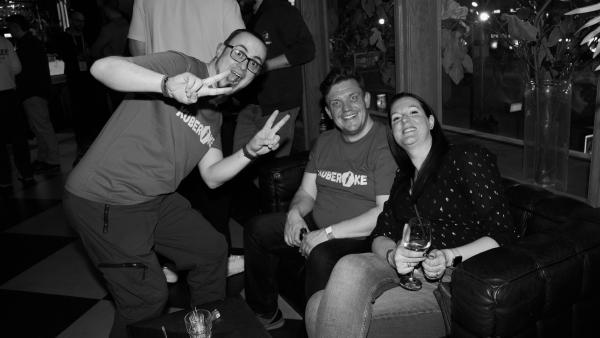
If you’re building something in tech, whether it’s a community, an event, or a team, ask yourself what you’re really protecting. What’s the essence you don’t want to lose?
Protect that. Everything else is just logistics.